
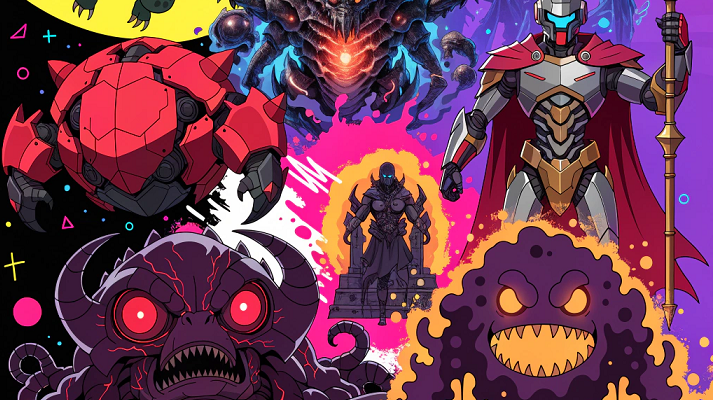
One of the problems that I’ve had designing the new style of bosses is simply that there aren’t many games to take inspiration from. Shmups have well-iterated boss designs, but there are limits to how much you can shove into a different genre. There isn’t a plethora of twin stick shooters, and the few that exist tend to feature uninspired boss fights. Hotline:Miami – the most famous twin stick shooter – is a great game with a great sequel, but the bosses exist purely for presentation and narrative. The actual gameplay is incredibly simplistic and shallow.
The same can be said for Nuclear Throne, Enter The Gungeon, and The Binding of Isaac.
Twin stick roguelikes were all the rage ten-fifteen years ago, but I’ve never much enjoyed them. The gameplay is quite shallow, so the way these games manufactured their difficulty was through brutally punishing the slightest mistakes, while handing out healing items like Ebenezer Scrooge. The boss fights are almost entirely shallow dodge tests that only appear difficult because the player needs to play through the entire game again to have another attempt at figuring out the boss. They remind me of Soulsbornes, in the worst way.
I got nothing out of studying Nuclear Throne and Enter The Gungeon. The Binding Of Isaac is even less helpful, as much of the gameplay challenge comes specifically from not being able to free-aim.
Continuing my study of the genre predecessors, I remembered liking Geometry Wars back in the day, and forgetting if there were boss fights. Turns out there weren’t until the second sequel. I never played it, but watching the below video is edifying. Projectiles that can be shot down add another dynamic to shooting and dodging, and I’ll probably crib an attack pattern or two from this.
First Person Shooters are by far the most common shooter genre, especially in the AAA space. Unfortunately, it’s next to impossible to find a decent FPS boss fight. To some extent, that’s because these games had the production values to substitute other things for their setpiece moments, such as vehicle sections, a stealth sequence, environmental novelty driven fights, or whatnot. Halo:CE’s final two sections being the engine room fight followed by the Warthog Run was a stroke of genius. One that I can’t disparage just because, twenty five years later, they might have helped me make my own game if they’d made a giant boss at the end.
In parallel with the increased budgets, the FPS genre started fetishizing realism over fun. Out were the wackiness of the Boomer Shooter, in was Call of Zionism Duty’s gritty pseudo-realism. Combine these two elements together, and bosses got written out of the FPS genre for about twenty years. COD and Halo have none. The Doom reboot, Quake 4, and Titanfall have a few, but none are particularly great. The same goes for Gears of War, which is a third person shooter anyway, and while Vanquish has good bosses, it’s really a Character Action Game masquerading as a shooter.
That leaves us studying the shooters of the 90s, which is unfortunate, because FPS bosses from the days of software rendering are almost unanimously trash. The norm is the godawful final fight in Half Life, a boss so bad that I actually knew a guy who placed Half Life as his favourite game of all time, while admitting that he’d never actually finished it because he hated the final boss so much. He was already fed up with the Xen bullshit, but this is was the last straw.
I’ve watched boss compilations from the original Doom, Quake, Heretic, Hexen, Blood, Half Life, Turok, and they’re pretty much universally terrible in terms of gameplay. Some have good ideas with respect to pageantry, although most of them are just terrible all round. At least the final boss of Half Life has some weird sci-fi flavour to him. The first boss of Quake feels like a particularly lazy fan mod. The game transforms into an incredibly lame and repetitive platformer where you run on an elevated sidewalk a few times, and then the boss dies.
Serious Sam had passable bosses, even if they usually felt far closer to gimmicks then well balanced fights. The game also cheated, although I use that term approvingly, giving most of the bosses a ton of minions. This lets the regular gameplay largely carry the encounter, with the boss serving mostly as flavour. That works in general, but since I’ve got a tiny production budget, it’s not ideal for me.
As far as indie titles go I was recommended Frogmonster as an example of a modern FPS that gets bosses right. I’ve never played the game, but having watched it I am impressed with neither the presentation nor the gameplay.
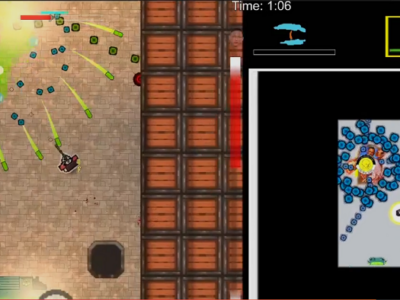
It’s actually somewhat encouraging seeing how terrible the competition is. Even this not particularly great boss experiment is more complex, and more fun to fight against than most of the shallow, gimmicky bosses inherent to shooters. But, we can do better.
On the other hand, Mega Man 8-Bit Deathmatch appears to be something of a gem. I’d never even heard of this game, but it was at least good for stoking the creative juices.
And Ultrakill may be the only FPS game ever made with great bosses, although I’ve never played it myself, so I can’t say that with any real confidence. Even if true, it’s still of quite limited value, as the game mechanics between Escape From Epstein Island and Ultrakill are so different that it’s hard to port over any designs, even just as a starting point.
There are only two genres that consistently have great bosses. Shmups, and Character Action Games. That’s not great, but there’s still some things we can learn from studying them.
5:50 (He’s contrasting the excellent boss he just talked about with others in later games in the series.)
There’s little to no back and forth here. You wail on an enemy until a big, dumb, obvious attack comes you way.
Nex Machina is probably the best twin stick shooter to come out in years, with the best bosses. The attack patterns are fairly creative, but there is ultimately a set pattern of bullets/attacks, and it’s hard to get a deep experience out of that.
It’s the difference between playing a fresh chess position, and still being in opening theory. Or, alternatively, between solving new tactics puzzles that share the same motifs, and “solving” the exact same puzzle over and over again. When there are no complicating factors, the strategy and tactics go out the window, and you are left with a game of rote memorization.
A lot of boss fights, even in character action games, amount to little more than memorizing the bosses moveset, and figuring out the exact, precise method you’re supposed to counter/beat them. Soulsborne style Simon Says gameplay is probably the worst offender, but even better games like Ninja Gaiden suffer from this problem to some extent.
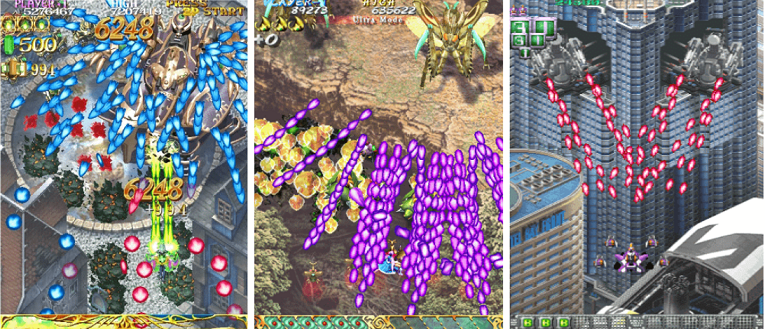
I’ve praised shmups in this article, and there are a lot of aspects of their designs that I admire. However, a lot of getting good at any particular shmup comes down to routing, which is another term for rote memorization of specific movements throughout a fight. This is an inevitable consequence of the player having almost no way to impact the bosses in these games, other than kill them quickly.
Dealing with any particular normal enemy in EEI quickly becomes a matter of technique for a good player. However, there are a dozen of them in play at any given time, and their unique health, states, and positioning relative to each other and to the player absolutely do affect things.
Dealing with the militarized police is easy, just go behind the nearest cover. Dealing with the roided out social media influencers is easy, just move away from them and draw out their leaps. But if the roidheads are currently occupying the space behind cover, you’d have to move towards them to get there. So instead, perhaps you snipe the ZOGbot so they’re stunlocked and can’t fire, but there’s a trash mob NPC in the way. And so on, and so forth.
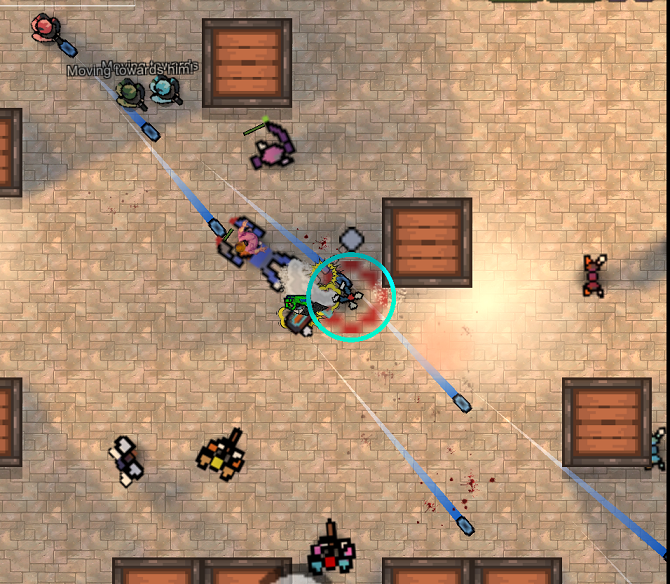
Normal enemies in groups naturally provides space for tactical and strategic mastery of a game to show, precisely because you can’t perfectly memorize the infinitely different combinations of enemies you will fight. Instead, you need to use heuristics, and better player simply do this more proficiently. The enemies weaknesses are also more natural, as you can’t necessarily exploit (for example) the post throw cooldown of an antifa throwing a urine filled water bottle at you, because you may be under too much pressure from other enemies.
However, if there’s just one enemy present – the boss – its weaknesses become laughable, in terms of both flavour and gameplay. There is nothing stopping the player from ruthlessly exploiting it, unless it has some asychronicity introduced, which I’ll talk about later. This tends to goad designers into making almost turn-based boss battles. The boss does its offense, and then courteously exposes its anus to you for a while, before doing more offense. Rinse and repeat for ten minutes.
(TurboButton continued)
Pacing is unnatural, and instead has to be forced with cutscenes scattered throughout.
That’s another problem I’ve had with my own bosses. Normal enemies have a nice, short life cycle. They spawn in, position themselves, deal damage, take damage, then die. Bosses need to hang around for much longer, but if they’re not doing anything different their healthbar becomes a test of how long the player can keep doing the same thing over and over again before they are allowed to win.
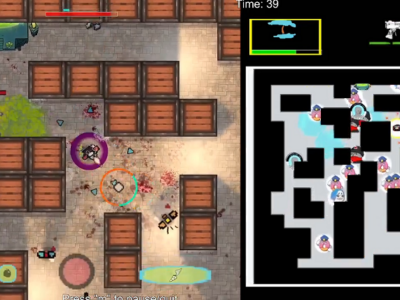
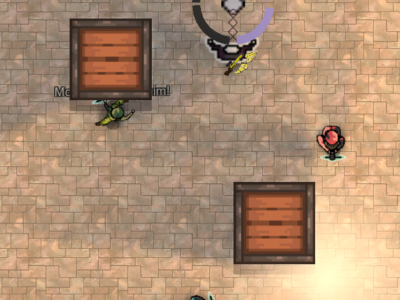
There’s also a second issue, where if they use the same poise system as the rest of the enemies, the player can just wail away at them until they’re dead. That is why I implemented health break points in the above boss, where it automatically regains its composure, and casts the spell that looks like bubbles moving towards itself.
And worst of all, their big, dumb, nature doesn’t play to the strengths of this kind of combat system. Actually circumventing your enemy, being able to jump over their heads, launch them into a combo, that’s kind of the secret ingredient to this system. But these fights function more like Zelda boss fights. It’s filling a pre-requisite before mashing the attack button, and that’s not the appeal of DMC.
Bosses also often subvert the more intricate systems of a game, because otherwise they’d be too easy. Bosses in RPGs tend to be completely immune to all status effects. Bosses in Action Games tend to be unjuggleable. I’ve tried making bosses immune to hitstun, yet hitstun is a fundamental mechanic of the game.
This article got a little bit long, so I’ll end it here and conclude it later.