

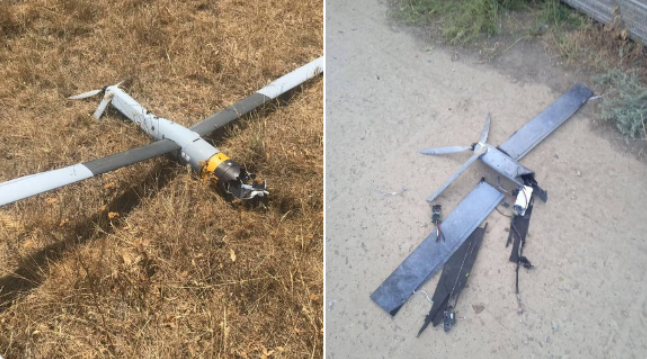
Below we see a prime example of why I hate the term “drones.”

Seth Harp, midwit journalist, manages to make Anduril’s founder, the zionist con artist Palmer Luckey, look reasonable and informed, by confusing tiny quadcopters with controllable missiles. His argument is that both are unmanned aerial vehicles, aka “drones,” and therefore both should cost the same.

This is about as stupid as concluding that a deep sea submersible designed to explore and film the Marianna Trench is a ripoff, because the thing below costs a couple grand, and “both of them are underwater vehicles with cameras attached.”

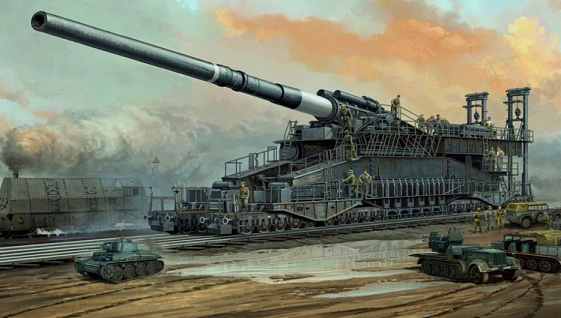
Or, alternatively, looking at the Schwerer Gustav, and throwing your hands up in the air because you can’t figure out why the cannon that fires shells weighing 15,000lbs costs more per shot than a BB gun, since “they’re both firearms.”
Using the idiot logic of Seth Harp we might as well compare the 5lbs quadcopter with the 5,000,000+lbs Saturn V rocket that put a man on the moon, because both are vehicles, and apparently all vehicles should cost as much as a DJI Mavic.

“Can you believe that this vehicle costs more than a toy RC monster truck made for kids!? I mean, they’re both vehicles!”
The comparison with the Saturn V rocket may be more apt than is immediately apparent, as ICBMs are essentially modern versions of this. You may not call an ICBM a “drone” but why not? We already have idiots referring to the Shahed/Geran cruise missiles as “drones,” just because the power plant is a piston prop as opposed to a turbojet.
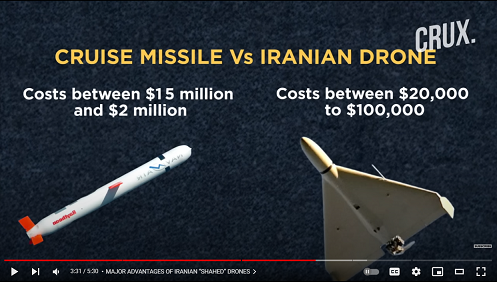 If some cruise missiles are “drones”, why not all of them? And if the cruise missiles are “drones” why not the ballistic missiles, as they also fly through the air and have rudimentary steering surfaces. For that matter, so do GPS guided artillery shells, so let’s start calling those drones as well, just to completely shit up the conversation.
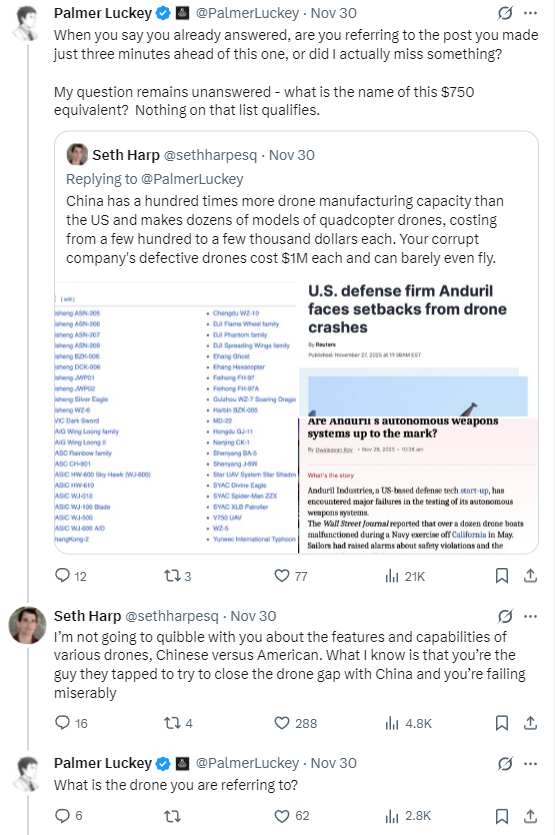
“I’m not going to quibble with you about the features and capabilities of various drones.” JFC
This epistemic pollution, where every vehicle that is unmanned is treated as interchangeable, leads to one of the most annoying myths about UAVs, which is that they are all cheap and disposable. Some of them are, some of them very much are not.
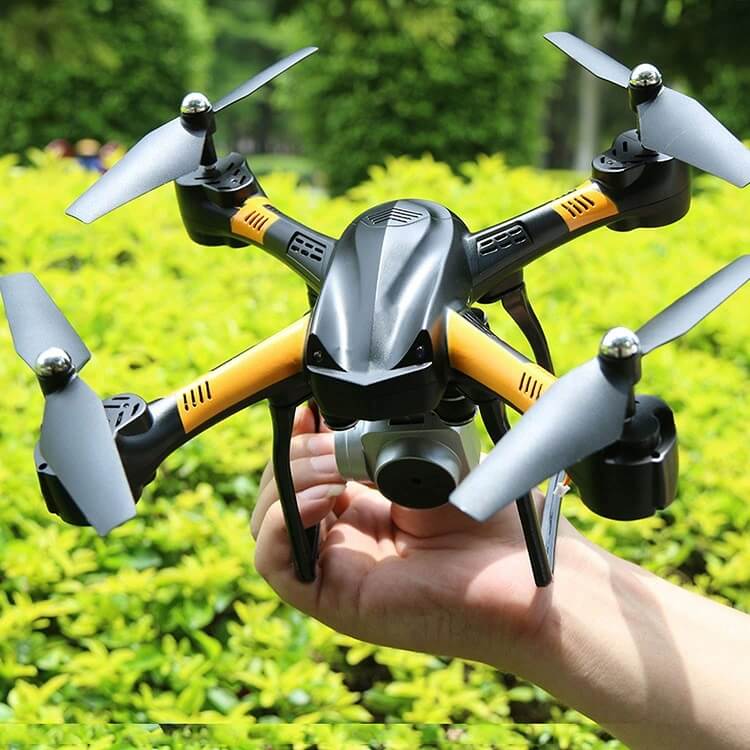
Flying a $500-1k recon quadcopter over enemy territory and having it be immediately destroyed – whether by losing line of sight, jamming, running out of battery, being shot by infantry rifles, etcetera – is bad, but not much worse than wasting a single 105mm artillery shell. Within reason, these things actually can be thought of as disposable munitions.
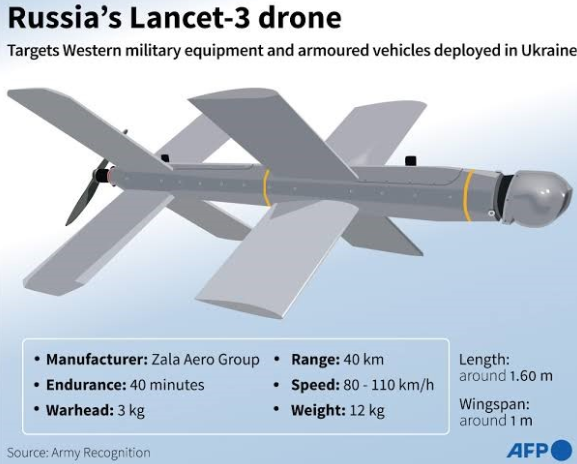
On the other hand, even the Shahed/Geran drone cruise missiles, renown for being cheap, cost in excess of $35k. Same goes for the Lancet drone loitering munition. It does not bankrupt your country to waste a few of these, but the cost of losing one is about the same as losing thirty five small recon quadcopters.
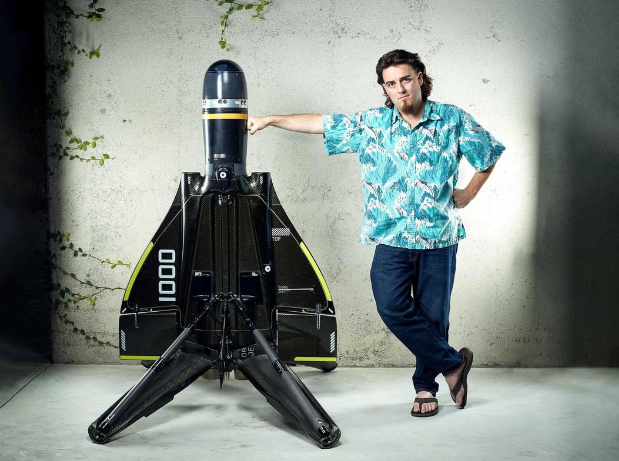
Then we have the Anduril Roadrunner, which was supposed to be the subject of today’s derision, which costs at least $500k per. Losing a single one of these is the equivalent of losing at least five hundred recon quadcopters, by price tag.
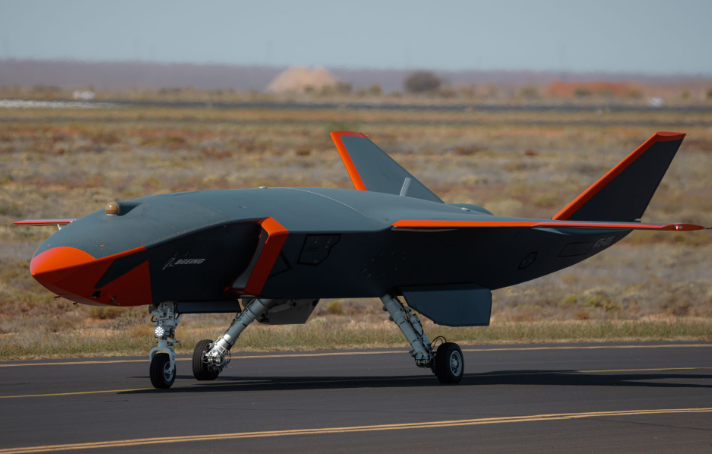
And of course, we have the fighter UAVs, which somehow manage to be more expensive than the manned fighters they’re meant to supplement.
Australia has taken a major step forward in advanced air combat technology by signing a 1.4-billion Australian dollar ($930-million) contract with Boeing Defence Australia for the delivery of six MQ-28 Ghost Bat drones.
Each of these things costs $155 million per.
It’s at this point that we must pause for a second, and acknowledge the elephant in the room, which is the Military Industrial Complex robbing you blind. The manufacturing costs for the garbage they make is not even remotely close to the cost charged to the Government, and therefore you the taxpayer. That’s why a JDAM kit, little more than a tiny GPS antenna combined with a Rasbperry Pi and rudimentary control surfaces costs $25k, instead of $250.
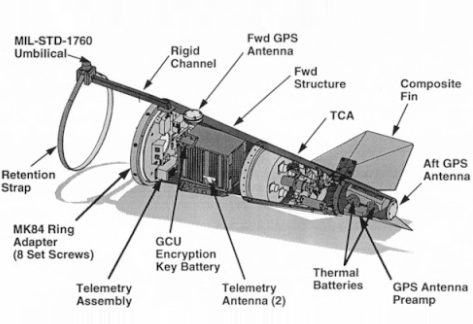
Even the lowest estimations for JDAM cost is $21k per.
GPS guidance only becomes absurdly expensive when American MIC parasites get involved. There are plenty of cheap quadcopters capable of autonomous flight to a pre-determined GPS coordinate, often done automatically upon losing connection.

For example, the above quadcopter retails for $168, despite offering a feature worth $25k…
Drones with Return to Home (RTH) make flying safer and easier. This feature helps your drone come back automatically if it loses signal or battery runs low.
Some quadcopters, such as the DJI Air 3, are capable of autopiloting themselves to a predetermined GPS location while using their cameras to navigate through a complicated environment. I don’t know what this would cost in MICLandia, but in the civilian world this retails for just a hair over $1k.
The tail kit below sets you back $25k.
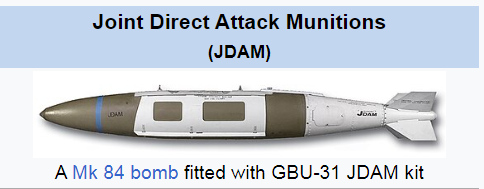
Anytime you hear the term “technology” in the context of the Military Industrial Complex, understand that you are being robbed to a degree not previously believed possible. Said technology may or may not work, and may or may not be relevant. Even if it works perfectly and is highly effective the profit margins will be obscene.
Having said that, there are legitimate reasons why certain types of vehicles or weapons cost more than others. Fighter planes, whether manned or unmanned, are complex machines weighing many thousands of pounds. For performance reasons they are made with carbon fibre composites and have titanium in the landing gear, airframe, and engine. I wouldn’t be surprised if some country managed to mass produce an exact copy of the F-35 for one tenth the cost, but anything significantly cheaper than that is probably a pipe dream. The same is true for the aforementioned MQ-28 Ghost Bat.
However, even if the Ghost Blyatt UAV cost $15 million, that’s still the cost equivalence of 15,000 well made recon quadcopters, and even ignoring the cost, Australia only has six of them. Point being, these “fighter” UAVs are among the least disposable things in the entire military, and if they actually worked, losing even one would be a catastrophically horrible thing that your military might never recover from. All this, despite them being “drones” and therefore, in the minds of journalists, being comparable to a DJI Mavic.
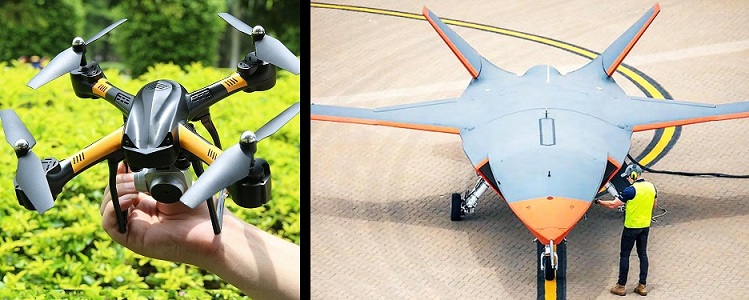
“They should both cost the same!” – some idiot journalist
It’s important that you know the difference, if for no other reason than you never accidentally make this midwit con artist look intelligent and reasonable.


Yes, this is really him.
Which is not a particularly high bar to clear, because his company, Anduril, is valued at over $30 billion despite never making a product that hasn’t failed spectacularly.
NEW YORK, Nov 27 (Reuters) – A U.S. military plane soared over Florida’s Eglin Air Force Base earlier this month and released a drone made by the defense tech giant Anduril Industries to test whether it could take flight and conduct surveillance.The drone – a winged model known as Altius – nosedived 8,000 feet into the ground, according to an Air Force test summary, reported here for the first time. Shortly afterwards, a second Altius drone spiraled to earth during a separate test, the summary said.
Remember that video above where that $1k quadcopter navigated its way through a warehouse? Eight years after founding, Anduril has yet to make a UAV that can reliably fly.

This is far from Altius’s first spectacular failure. Same for their “Ghost” UAV which we’ll get to in a second.
But the Ghost X has also had issues in more recent tests. A video shared with Reuters and separately posted in January 2025 on US ArmyWTF, an Instagram account run by an Army veteran, showed a Ghost model spinning out of control before crash landing near soldiers in an unidentified location.“I told you this would be a clusterfuck,” said one unidentified person in the video.Reuters verified the footage as having been recorded during a weeks-long U.S. Army exercise in Hohenfels, Germany that began in mid-January, and included use of the Ghost X.
Back in March, user @DrChrisCombs made fun of the Altius on twitter. A wild Palmer Luckey appeared, ready to throw down.

Which then prompted this spirited twitter war between Anduril founder Palmer Luckey and anonymous twitter user @froger14.

All sounds good and well until your Lancet can’t even fly 10% of the way to the target, to say nothing of jamming.
Anduril’s really figured out the whole jamming thing.

While Anduril drones crash during Air Force tests and struggle against Russian jamming, the U.S. government is preparing to ban DJI by default on December 23, 2025, without conducting the security audit Congress mandated. Florida already destroyed $200 million worth of working DJI drones and provided only $25 million to replace them with Blue UAS alternatives that cost 8-14 times more and meet only 20% of mission requirements.
Anduril’s “Altius” loitering munition is America’s response to Russia’s Lancet. As such, they retail for almost one million per, while a Lancet costs just $35k. What you get in return for the thirty times higher price tag is the totally irrelevant ability to launch from a tube and some easily spoofed AI meme program that will, at best, demolish some decoy or murder civilians. The only “advantage” it has over the Lancet is range, which is largely irrelevant in a loitering munition.
The ~20 kilometers or so behind the front is a target rich area. On top of that, it’s extremely difficult for the enemy to intercept aircraft/missiles in that area, because it’s effectively impossible to operate radars and anti-aircraft vehicles near the front without them being found and later destroyed by artillery, loitering munitions, or other strike assets. When you’re flying 50+km from the front you will start to encounter these assets, clustered around anything worth protecting.
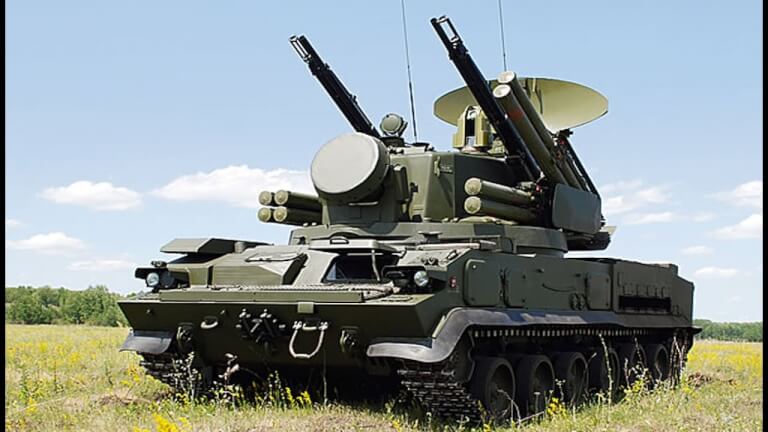
I have some critiques of SPAAGs, but that’s for a later article.
That’s why the claimed shoot down rates for Shahed/Geran cruise missiles in Ukraine are anywhere between 80-97%. They have to run a gauntlet of air defenses involving SPAAGs, towed radars, towed AAA, spotlights, jammers, prop aircraft, etcetera. The shootdown rate will undoubtedly be higher for loitering munitions, as they need to expose themselves by puttering around the general target area looking for something to hit.
What we get in exchange for this massive attrition is the dubious chance of finding a target of higher value than the infantry, AFVs, pickup trucks, prebuilt firing positions, and other juicy targets present at the front area we had to fly over. Of course there are valuable targets in the rear, but most of them are static targets, and we already have cruise and ballistic missiles for that. As a result, expensive long range loitering munitions are an ultra-niche product, whereas cheap, short range loitering munitions are consistently valuable.
UPDATE: I forgot one other massive downside. The Altius has a cruise speed of 60kmph, and a 35lbs warhead. Should it happen to see something of value, like a Patriot missile battery, it may spot it from 30+km distance. It would then have to fly all the way over there, risking being shot down or running out of battery, all to deliver a small payload.
Alternatively, skip the warhead, and have a purely recon UAV that is much lighter and cheaper, with far better range and loitering capability. Upon spotting the aforementioned 30+km distant missile battery, queue up an SRBM with a thousand pound warhead that hits the target faster and more reliably.
Long distance fixed wing loitering recon UAVs, such as the Zala 421, Zala-16, Orlan 10, Orbiter 2, BirdsEye, and many others are often far more practical than vehicles that must deliver a warhead themselves.
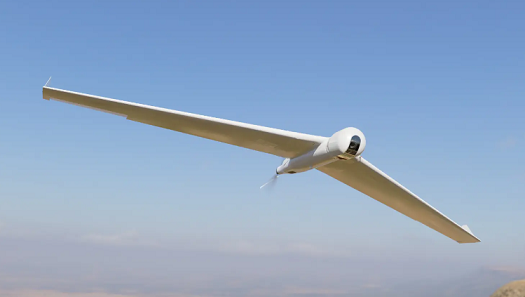
Zala-16
Nevertheless, there is some value to occasionally attaching a camera and a remote control system to a cruise missile, which is exactly what the Russians do with the Geran 3. That version of the Geran has over twice the loitering time and range of the Altius, and three times the payload, yet costs just 10% despite having a jet engine, in contrast with the Altius’ electric motor.
There only outstanding feature of the Altius is its price.
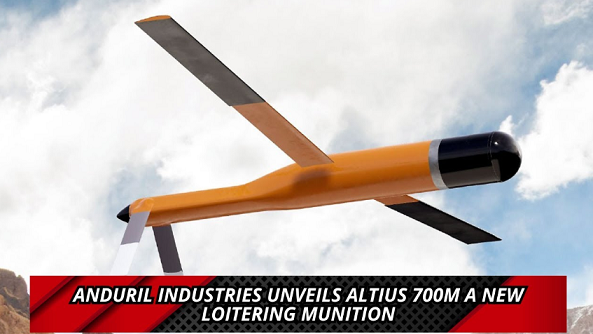
It wouldn’t be that difficult to copy the Lancet. However, they would struggle to justify a competent knockoff costing thirty times more than the original, which is the real reason why Anduril and the rest of the US MIC focuses on random bullshit like AI, tube launches, and irrelevant range. It allows them to pretend to have a massive capability advantage over existing products, and therefore charge blatantly non-competitive prices. This non-function driven parasitism is why they’re years behind the rest of the world when it comes to the basic, bread and butter stuff.
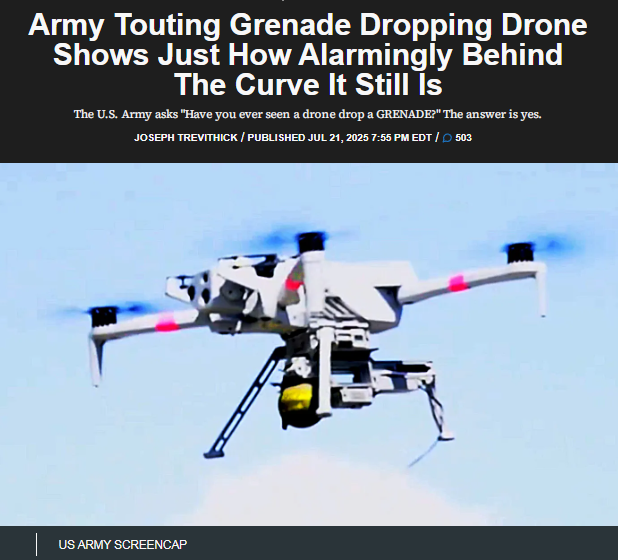
This class of hybrid loitering munition proven to work, unlike the Altius.
Which brings us to Anduril’s “Ghost” UAV. To educate myself on this product I headed on over to the relevant page on Anduril’s website, only to find it so poorly coded that it chugged my entire computer. Not exactly confidence inspiring, but luckily I stumbled upon a wonderful shill piece work of responsible military journalism enlightening us as to the many wonders of this miracle weapon. I have highlighted a select choice of buzzwords very important features, which justify’s Palmer’s rationale for “not competing with [DJI UAVs] on a dollar-to-dollar basis,” and an estimated price tag of over $50k.
TweakTown (September 2020):
The new AI-powered drones are the first generation that can perform reconnaissance missions, according to Luckey, where the drones will fly out and search areas of land for objects of interest. This would include weapons, people, hardware (spy equipment), and more.Anduril is using machine learning to analyze the images and video that the Ghost 4 drone takes, and feeds it back to base. The 2-meter aircraft can be toted around in a backpack, can survive flights through sand, mud, seawater — all military operations and environments where it will be used.The new Ghost 4 drone has a 100-minute flight time, and can be either remotely piloted — or autonomously flying around on its own. It packs an array of cameras, radio-jamming systems, and lasers in order to identify and highlight targets.Not just that, but Anduril’s new Ghost 4 drone can also drop packages weighing up to 35 pounds.Just think of the military operations it is capable of… cameras, video, lasers, AI, deep learning, and it can even drop packages. Imagine an AI-powered drone flying over jamming enemy radar, so it’s totally stealth — and then dropping an important package in the middle of the battlefield.Anduril’s Ghost 4 drone is pretty versatile, with Luckey explaining: “One person can manage dozens of Ghosts”. Better yet, Luckey says they can be “programmed ahead of time” in order to fly “dark” where the Ghost 4 will be monitoring a particular location or tracking suspects — but get this, it will send and receive no data — so it won’t turn up on radio signals.Luckey describes Anduril’s new Ghost 4 drone as a “Swiss Army knife that can do everything”.
The classic Swiss army knife, famous for being great at everything!
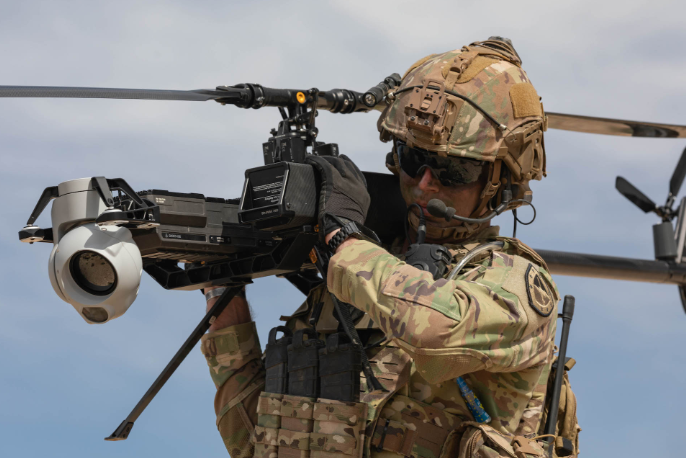
I can’t wait until the Brave Ukrainian Defenders of Golden Toilets for Israel Western Civilization Respectors get their hands on these things and immediately AI laser the Russian ruzzian ork hordes into –
The Ghost drone program hit its own turbulence early in the Ukraine conflict. Anduril sent roughly 40 of the miniature helicopter-style reconnaissance drones to Ukrainian forces in 2022. Soldiers quickly grew frustrated as Russian jamming systems disrupted the aircraft. Four sources familiar with the situation said the company had miscalculated how terrain and satellite navigation interference would affect flight operations.
Anduril’s Ghost is so bad that Ukraine doesn’t want them for free, and the same is true for the Altius.
The real gut punch comes from Ukraine, where Anduril’s technology faced its first true battlefield test. Ukrainian SBU security forces found that the company’s Altius loitering drones repeatedly crashed and failed to hit their targets. The performance was so poor that Ukrainian forces completely stopped using them in 2024 and haven’t deployed them since.

Anduril’s list of disasters is as long as their product page.
The most alarming incident occurred during a Navy exercise off the California coast in May, where more than a dozen of Anduril’s autonomous drone boats simply stopped working. Sailors on scene warned of “safety violations and potential loss of life,” according to the Journal’s reporting.
Imagine losing a major naval battle and becoming shark food because this fucking idiot was put in charge of defense procurement through backroom deals.

We’re not even close to done.
But the problems don’t stop there. During summer testing, Anduril’s unmanned fighter jet called Fury suffered a mechanical issue that damaged its engine during ground tests. Then in August, a test of the company’s Anvil counterdrone system went so wrong it sparked a 22-acre fire in Oregon. Each incident represents millions of dollars in development costs and, more critically, eroding confidence from military customers.
POV: You were enjoying a hike ten kilometers from an Anduril test site.

A casual glance for their other meme bullshit products lead me to Pulsar-L, a technically infeasible non-solution to the non-extant problem of enemies wasting all their recon quadcopters by spamming them in your general direction for no reason. Jamming requires a lot of power applied directionally, and even cheap UAVs have basic INS fallbacks when the GPS signal is spoofed or jammed. But apparently you can just pulse a blue mist in their general direction for a fraction of a second and they all commit seppuku.
Even when Anduril’s products possibly work as intended, their justifications are nonsense. A prime example is their Barracuda-M “replacement” for the Hellfire missile.
The Barracuda-100M is powered by Anduril’s Lattice for Mission Autonomy software platform, enabling collaborative autonomous behaviors that can be rapidly updated to address evolving mission needs.
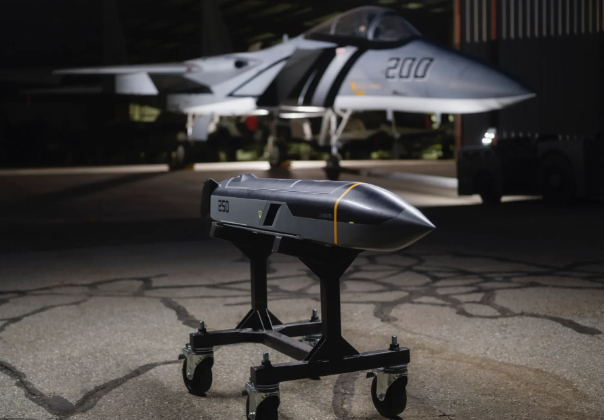
This is gibberish but this article is already far too long.
“The Barracuda-100M met or exceeded all vehicle performance criteria, including high-G maneuvers and autonomous mission execution,” the company said in a statement.
The Barracuda’s tiny foldout wings give it neither the lift capacity to generate high G turns, nor the structural strength to withstand them. Luckily, turning ability is totally irrelevant in a cruise missile, which need only make gentle, minimal turns. The talk about “high G turns” exists so it can differentiate itself from other, already extant cruise missiles, and thus jack up the price. However, barring extreme incompetence, there is still a good chance that it actually functions as a cruise missile.
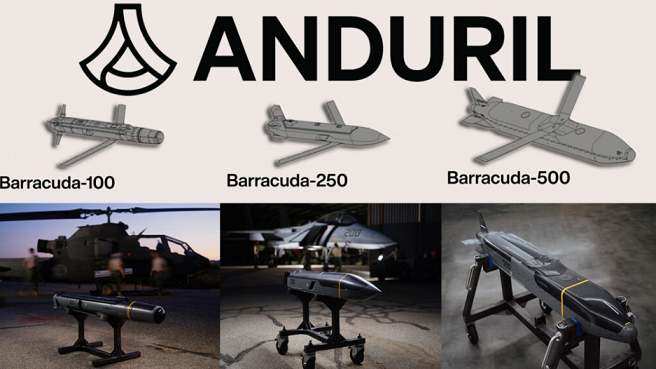
Far more ridiculous than the nonsense about high G maneuvers is its justification for replacing the Hellfire missile.
The Barracuda-100M is designed for high-volume, affordable production and offers ten times the range of the similarly sized Hellfire missile at a comparable price point, Anduril says. Its modular design allows integration with various payloads and sensors, supporting diverse missions.
I can’t stress enough that I’m not taking this out of context. This isn’t a one-off line written by some propagandist who doesn’t get it. This is their sales pitch.
Barracuda-100M is a software-defined, hardware-enabled platform designed for scalable production and high-volume operations. It offers ten times the range of similarly sized Hellfire missiles at similar cost and supports Anduril’s Lattic software and third-party autonomy frameworks.
Anduril managed to make their guided rocket have longer range, by making it a cruise missile instead.
To be fair to Anduril, they’re far from the first to pretend that standoff weapons which take minutes to reach the target are valid substitutes for close in guns and rockets that take seconds to reach the target, usually by ignoring the whole time thing, and hyperfocusing on the safety of the individual operator. A great example is how Lockheed Martin sells the F-35’s laughably non-existent ability to do CAS by simply redefining the term.
25:50: The final piece of the Close Air Support puzzle is the F-35, which has finally found its way into the role after years of being shoved away. It will mostly serve from extremely far away because the airplane is the USS Enterprise of aviation, with its sensors capable of identifying and leading missiles to target from so far away the enemy’s warning and surveillance systems never realize it’s even in their airspace.
FFS. I can’t even get to the bullshit about range without addressing the “muh sensors” meme.
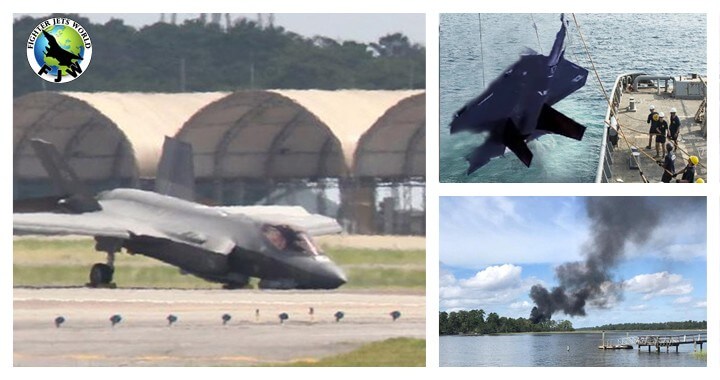
In RealityLand, figuring out the location of the enemy, whether that be infantry, AFVs, artillery pieces, etcetera, is an immense problem that we throw a massive amount of resources at, such as recon satellites, quadcopters with visual and infrared cameras, forward recce infantry, etcetera, just to partially solve. No matter how competent our military is, we don’t get to just know where the other guys are because they are not throwing dance parties in the middle of open fields. Instead, they are holed up in bunkers, trenches, buildings, and otherwise hiding themselves from our prying eyes, which already includes aerial reconnaissance as we are presumably operating large numbers of recon quadcopters.
But in LockheedMartinLand, it’s incredibly easy to know where all the enemy guys are. Just fly an F-35 200km away from the front and use its x-ray bloodseeking force multiplier technology to find out where all the enemies are, down to the last infrantryman in a cellar. The way it achieves this seemingly magical feat is by having one single infrared camera, the same thing that our ground forces have in abundance, including on the recon quadcopters, on almost all AFVs, and in the hands of the infantry.
Am I getting through to you how fake this is?
With that out of the way, let me re-focus on the bizarre and incredibly stupid fetish for range over immediacy. The F-35, according to that annoying British shill, is supposed to do close air support from “extremely long range.” One can therefore conclude, that it must be using weapons that have correspondingly long ranges as well, such as the Barracuda-M cruise missile.
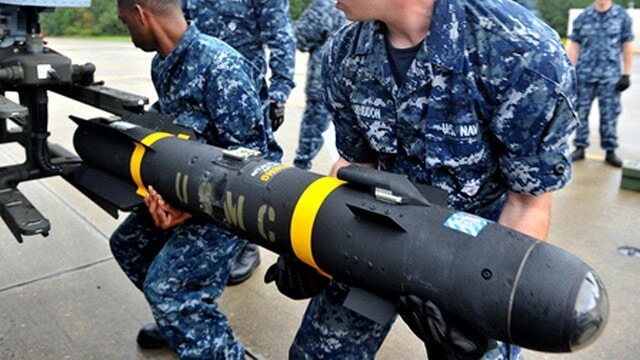
The Hellfire AGM that the Barracuda “replaces”.
The Barracuda 100 has a purported max range of 220km, the 250 ranges out to 370km, and the 500 can travel for almost 1,000km. All three of them have the same (claimed) maximum velocity of about one kilometer every four seconds. If these cruise missiles are fired at their longest ranges, then it will take 880s(13m:20s), 1480s(24m:40s), and 4000s(1h:6m:40s) for them to hit their target. If said target is not a building, or otherwise immovable, it’s probably not going to be there anymore.
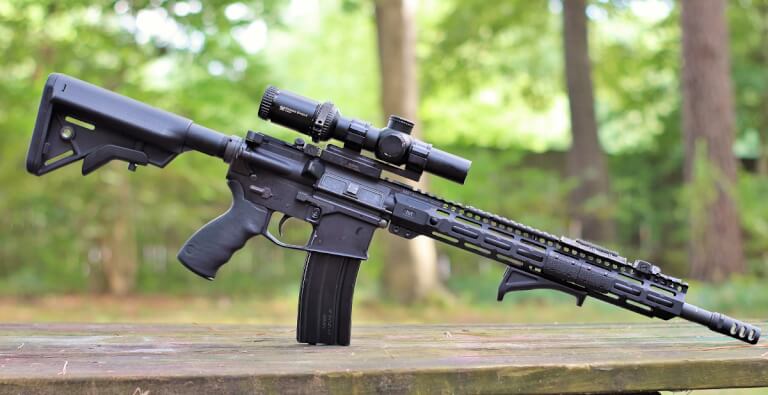
Compare this to the most common direct fire weapon, the rifle, which shoots bullets that travel at speeds of about 800m/s. The rifle is designed to be used at relatively short distances, of less than a kilometer, where the bullets will hit their targets in a fraction of a second. When could we ever possibly need that capability?
Well, imagine that you are an infantryman walking down a street that you thought was cleared. Unbeknownst to you, there are two enemy infantrymen roughly behind you, a half second from pulling the triggers that will end your life.
It may look dire, but there’s no need to worry. You’re getting “CAS” from an F-35 flying a mere 200km from your position, well within the max range of the Barracuda-100. The F-35 pilot also used the sensor fusing force multipliers in the aircraft to telepathically sense the danger you are in, and managed to immediately, as in within the millisecond, launch a Barracuda-100 at the exact, precise location where the bad guys are currently standing.
Half a second after the Barracuda is launched, the enemy soldiers blow your brains out. Five second after and they’ve left the ambush site entirely. Thirteen minutes and fifteen seconds later, the Barracuda-100 triumphantly lands with absolute millimeter precision at the location that the bad guys used to be at, but which is now currently occupied by our guys checking on your lifeless body, so we killed them.
Here is a short, incomplete list of weapons/systems that could actually help in your situation:
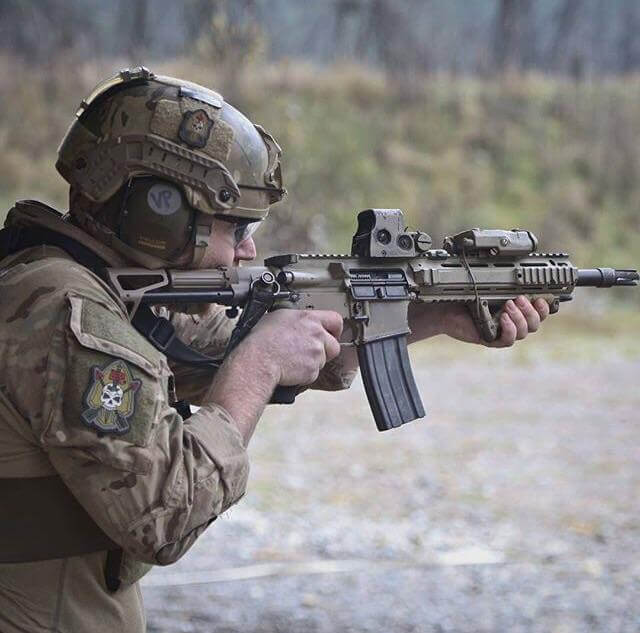
The bullets fired out of the gun of an infantryman within 100m of the ambush site.
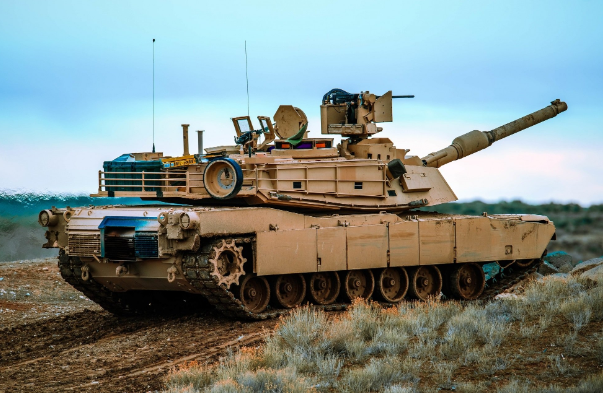
The bullets and shells from a tank, placed in the exact same position as the soldier.
The bullets and rockets from an attack helicopter hovering one single inch above where the tank was.
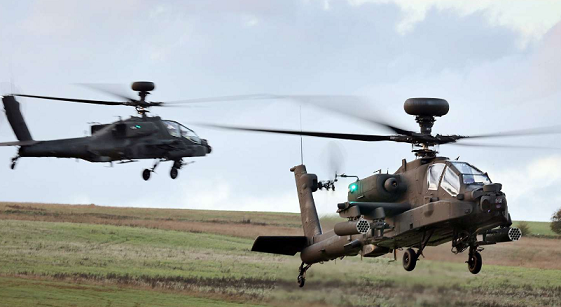
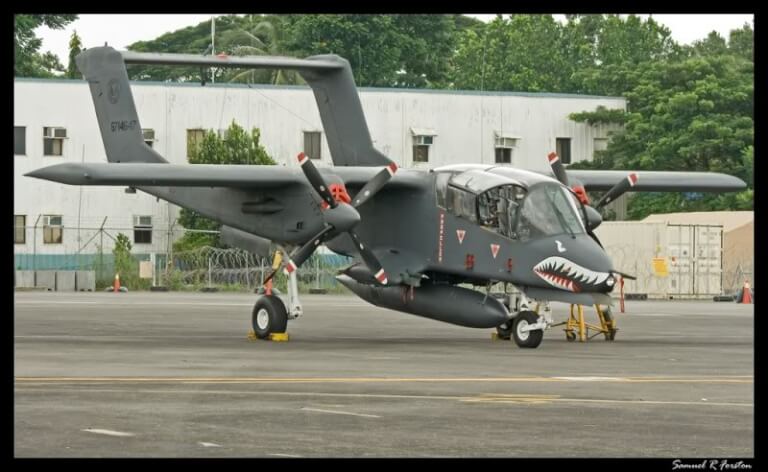
The bullets and rockets from a CAS plane in the same spot, just moving forwards at 30m/s.
Here’s a short, incomplete list of weapons/systems that won’t do diddly shit:
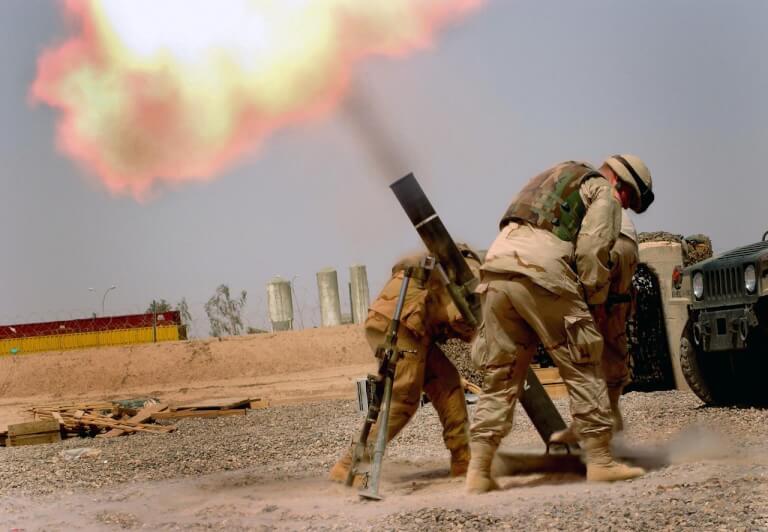
The bomb from a mortar that takes 20+ seconds to reach the target.
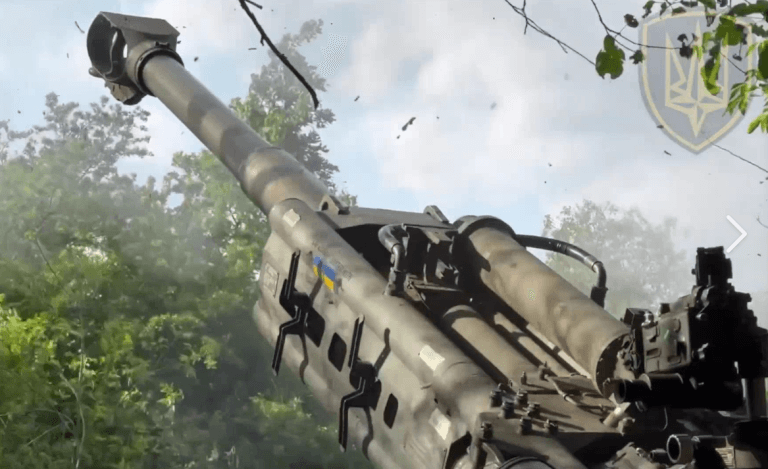
A 155mm artillery shell that takes 30 seconds to reach the target.
A rocket arriving on target in a mere five minutes.
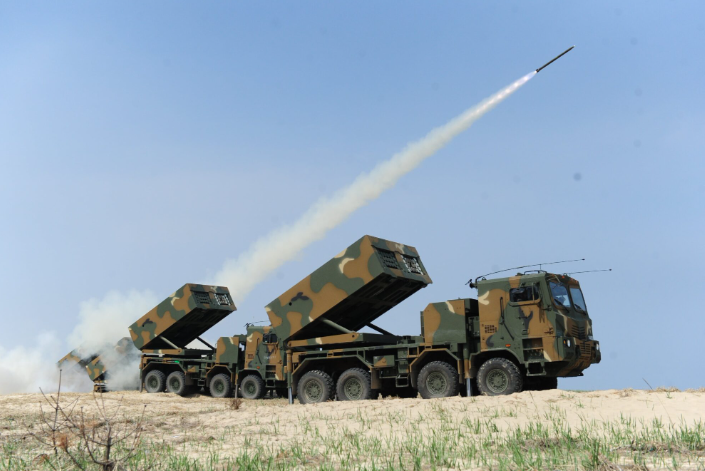
A short range ballistic missile arriving on target in ten minutes.

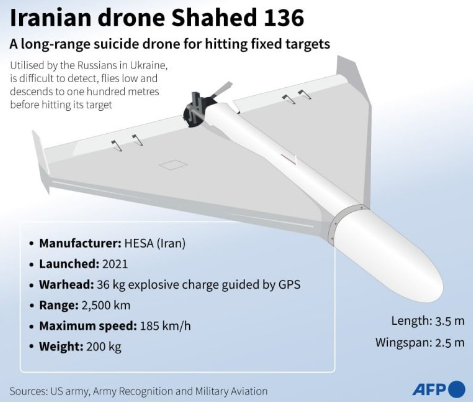
A slow cruise missile (Shahed) fired from 180km away, taking an hour to reach the target.
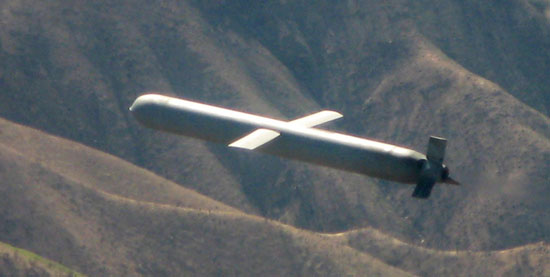
A fast cruise missile like the Tomahawk fired from the same distance, which takes 12 minutes to reach your position.
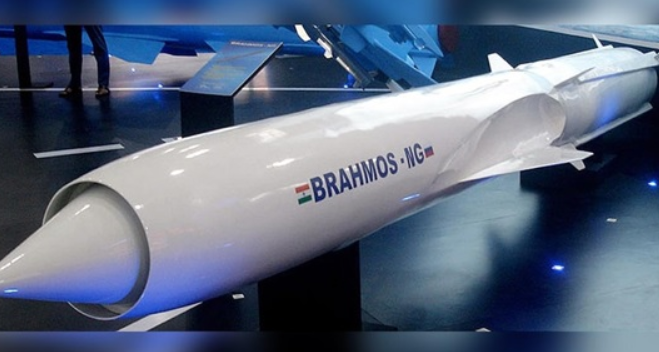
The fastest cruise missile ever, flying at speeds of almost 1km/s, fired from that position 180km distant.
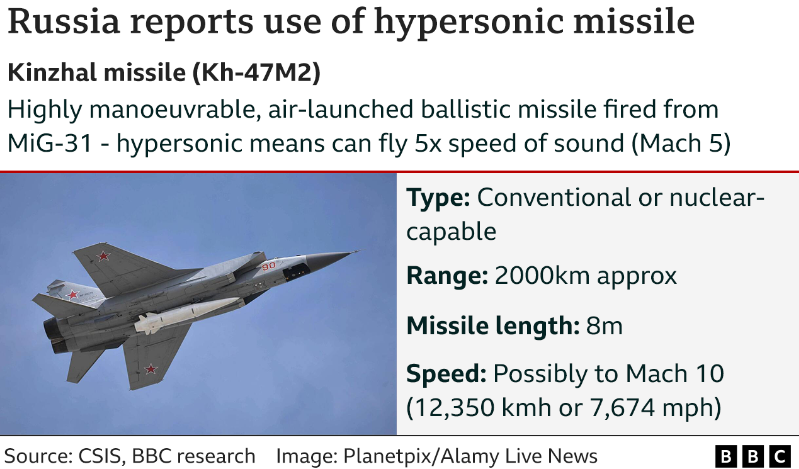
If you’re going to die unless we get weapons on target in less than half a second, then even if we used hypersonic weapons that have a max speed of three kilometers per second, and even if they somehow broke the laws of physics and instantly got up to those speeds upon launch, and if all other technical and practical limitations were handwaved away, the maximum distance we could be from the enemy is just 1.5 kilometers.
Contrary to what Lockheed Martin would have you believe, when infantry expose themselves by running across fields, or from one building to another, or just peaking out for a snap-second, they tend to do this as fast as possible. They generally prefer not to stand in the open for thousands of seconds patiently waiting for the cruise missile fired from the F-35 at very far distances to work its way towards them.
If there are any 14 year old Call of Zionism Duty players who still don’t get it, imagine that your gun didn’t shoot bullets immediately, but rather 700 seconds after you pressed the trigger, and then ask yourself if that might affect your K/D ratio.
The reason I use the example of you personally being the infantryman who will die without some form of close and therefore near-immediate fire support is because it puts into perspective the fake moralizing behind hyper-focusing on the safety of the operator of fire support weapons, and ignoring the safety of the customer of the fire support. The idea that we can ask infantry to risk their lives in combat, but have no obligation to provide them with appropriate fire support is a disgusting and malicious meme perpetuated by the MIC purely so that they can sell overpriced garbage that wouldn’t solve the same problems even if it worked perfectly.
Of course it is dangerous to operate tanks/CAS, or other AFVs in combat. It is also dangerous to be an infantryman, especially one who has not been provided appropriate fire support, and is currently in a gunfight against enemy infantry who are supported by tanks/CAS and other near-instantaneous weapons that are actually relevant, instead of a few cruise missiles spammed from an F-35.
There is a very long discussion to be had about the future of both close ground support vehicles and close air support vehicles. This discussion does not need to be polluted by MIC bloviation about how entirely different classes of weapons can replace these because “muh sensors” or “muh technology.” Using long range, high latency weapons in place of short range, low latency weapons is a meme for obnoxious midwits, not a real military strategy.

To be clear, long range weapons can be extremely valuable, and I think it’s another sign of our parasitical MIC that we have such tiny quantities of various types of the aforementioned weapons, such as artillery, cruise missiles, etcetera. There is no contradiction between wanting mass production of standoff weapons, and recognizing their limitations.
With that understood, let’s circle back to the utter stupidity that is Anduril’s Barracuda cruise missile designed for long distance shots against buildings replacing the Hellfire guided rocket designed for shooting moving targets at close range.
Hellfire
At first glance, it might seem like the previous analysis based on speed is irrelevant. After all, the Hellfire’s top speed of about 0.4 km/s is not even twice as fast as the Barracuda’s top speed of about 0.25 km/s. So while it is certainly true that the Hellfire will hit the target faster when fired from in close, you could also fire the Barracuda from in close and it would hit the target nearly as fast. Right?
Well first of all, that would totally negate the entire point behind the longer range. But secondly, no, not right, because one has an airplane engine, and one has a rocket engine. Ever seen an airplane takeoff this quickly?
I couldn’t find the exact numbers for the Hellfire, but the rocket in the comparable Hydra produces a thrust to weight ratio of about 56:1, accelerating the rocket to ~750 m/s in just over one second. Likewise, I can’t find the exact figures for Anduril’s Barracuda, but comparable cruise missiles such as the Tomahawk have a thrust/weight ratio of about 1:7. In other words, the Hellfire accelerates at roughly three hundred and fifty times the rate of the Barracuda.
It is precisely the massive burst thrust of a rocket engine that enables the extreme short range maneuverability of a missile. They can get up to extreme speeds quickly, and they can also use that thrust to turn.
There’s no such thing as a high off-boresight shot with a cruise missile, no matter how much Anduril bloviates about “high g maneuvers”. It is a fundamentally different design.
Which effectively means that the only way you could use the Barracuda in close is if the F-35, a plane with a turning radius of over a kilometer, was already flying at high speeds directly towards the target. Should the target be even a tiny amount off to our side we have zero chance of hitting it.
The Hellfire has this capability in spades, in exchange for not having an engine that can provide a low level of thrust over a very long time period. Luckily, the Hellfire does not need an engine to produce thrust for an hour, because the missile is designed to hit the target and explode about five seconds after launch.

I bring all this up because I can easily imagine a world where the exact same con artist “genius” went in the other direction, and replaced our functional cruise missiles with rocket powered missiles. That would also make zero sense from an engineering perspective. Cruise missiles don’t need speed above all else, and they definitely don’t need acceleration. They also don’t need the high G maneuverability of a rocket powered missile, especially just after launch. What they do need is a low burst, high sustain type of engine that efficiently propels them for thousands of kilometers.
But get a load of this acceleration!
Technical and practical reality not only don’t matter to the MIC, they like idiotic nonsense, as it helps them differentiate themselves from prior solutions, which in turn justifies overpriced bullshit. Nobody ever tried replacing a guided rocket with a cruise missile before, because it is so obviously stupid, but Anduril can use that to pretend that they’ve invented this whole new thing.
I would honestly not be surprised if, after replacing our guided rockets with cruise missiles, Anduril themselves decided to replace our cruise missiles with guided rockets. I can already see the slickly edited trailers, shills like MegaProjects repeating irrelevant non-sequiturs, and Palmer Luckey, major investor Peter Thiel, and Dicksuckin‘ Donald Trump all sitting down in the oval office and deciding that yes, this is a fantastic use of taxpayer money. What’s one more meme project spawned from the mind of an obese cosplaying dork who has never met a non-solution to a non-existent problem sold at ten times markup that he didn’t want his name on?
Speaking of which, above we see Anduril, a product so bad that, even if it worked perfectly, it would still be cripplingly self-defeating if ever put into action. I’ll have to save that for the next article.











Nice post! The spec fetishism discourse reminds me of constant Western coping and seething about how Russian systems are all hastily thrown together junk, inherently inferior to products of Western MIC. To quote their description of UMPK kits:
“made hastily and quickly thrown into combat, without carrying out the full required tests”; “poor performance and a high failure rate”, “unreliable”, “wing’s aerodynamic characteristics are poor”. What was their sources for the claim? Did they collect and analyze hit and miss data from video footage and geolocations? Of course not. I kid you not, the source was “an anonimous analysis published on the Internet” and photo of early prototypes which were unpainted and had some ugly welds. Oh, and they sure love to point out that Russia uses imported components in their systems, something that US MIC would, of course, never do.
https://www.twz.com/the-truth-about-russias-mysterious-winged-glide-bombs
Entire NATO shill information ecosystem is full of this crap. Another example that comes to mind is them claiming that American clusters munitions are all environmentally sound, safe and effective, compared to crude and primitive Russian analogs, because dud rates (as measures by MIC salesmen in tests on hard ground in a desert) is sub 5% compared to Russian ~30%. Then turns out that in forrests and soft, muddy grounds of Ukraine American dud rate inexplicably jumped right to Russian levels. Who would have thought?
Regarding “Altius” and Lancet. Creators of Lancet themselves explored the revolutionary idea of “lets put much larger foldable wings on Lancet and make it tube-launched”, which led to development of the Изделие 53, dubbed “flying swastica”. But it never went to mass production, presumably due to the same reasons you have outlined. I also suspect that having larger lifting surfaces might hinder maneuverability during the dive onto the target, which is important if the target is mobile and is trying to avoid getting hit. There was a video of a pack of Lancets hunting down a CEASAR wheeled SPG, which was driving full speed on the road and maneuvering like crazy. Good luck hitting that with long draggy wings! There is a reason why video guided Geraniums are not usually used against moving largests (except trains, which have zero maneuverability).
Never judge a book by its cover, but that Lancet 53 looks incredibly stupid, and I’m shocked that it even flies. Maybe I’m just looking at poorly drawn concept art, but I don’t even see a tail on that thing. I know there are some tailless aircraft, but I’ve never seen one without a delta wing.
While it is true that larger wings will add excess drag, and the delta wing of the Gerans is particularly draggy due to vortex generation, the larger wing would in theory help with maneuvering, not hurt. I think the Gerans are unmaneuverable for reasons unrelated to their large wing. It’s a design that’s designed to putter for a long time, so there’s not a lot of excess power, but mostly I doubt that the roll rate is high. Actually, I’ve never seen them roll at all, although they do appear to have ailerons, they appear to be only to stabilize flight. Anyway, if they’re not rolling into the turns, then they’re not using their wings to turn, instead relying on the rudder. That’s fine for a cruise missile adjusting course, but obviously ill-suited to chasing down a maneuvering target.
I should note that AAMs don’t need to roll into turns because they have an x array of wings around their bodies, which means that they generate lift in the direction of the angle of attack, albeit draggily.
Good point about roll rate. However, looking at Altius, I am unconvinced that it would be that good at rolling either. I’m not an experts at aerodynamics, but my gut feeling tells me that a pair of long thin wings is not a great choice for pulling rapid maneuvers both because they don’t seem very structurally robust and need a considerable clearance. So, maneuvering close to the terrain or buildings would be dangerous. Also, you can forget about flying into the buildings or hide-outs.
Regarding Lancet – while mainline models (Lancet 1 and 3) are solid, the derivatives they have tried to create have been questionable so far. In addition to flying swastica, they also made a variation with 4 pulling motors on the wings instead of one pushing at the tail. I don’t think they have ever been produced in any considerable numbers though.
The Altius has relatively high aspect ratio/long and thin wings. These kinds of wings, in the extreme as found on a glider, are indeed bad for rapid maneuvers. Partly this is because of the lack of structural strength, as you note, and partly this is due to the practical dimensional/clearance problem you note. However, long, high aspect ratio wings are also terrible for roll rate, for the same reason why figure skaters bring their arms in close when they want to spin fast.
The delta wing on the Gerans would theoretically enable a decently high roll rate, provided they have large ailerons. I question their ability to roll for practical reasons. I don’t think they’ve been programmed to fly that way, since rudder turning is more than enough for a cruise missile, and rolling to turn complicates the autopilot software.
Dr. Sheckelstein,
– when I was your age, I too studied Saturn V rockets.
They are fascinating, are they not?
I would be thrilled if you devoted a post to how they were deployed during Apollo missions.
Young people these days do not care about anything unless it is gaymin’, social media, bling-bling, influencers, AI slop or some admixture thereof.
Tell us what you know, please.
I’m quite sure you know more than me. There is perhaps no greater a symbol of ZOG than the abrupt ending of space exploration, our greatest civilizational achievement.
It is my belief that end of Cold War was the point of no return for Europeans. Unconstrained by the potential need to mobilize human and industrial resources to fight a land war with Eastern Block, ZOG put the their social programs (including managed decline and demographic replacement) into an absolute overdrive. It also enacted same programs onto the other half of Europe, which was previously insulted from the worst of it by the Iron Curtain. The flood of drugs and degeneracy and diseases (both physical and mental) that followed was unimaginable in scale. The Eastern Europe went from above-replacement fertility, mostly functional societies into nosedive basically overnight.
Gorbachev and his peacenik faggot ilk deserves to burn in hell for eternity. At least he got a Nobel peace prize (aka shabbos goyim of the year) award for cucking to globohomo.