


I’ve never been all that nostalgic for the days of the arcades. Their financial model was sort of a pre-cursor to microtransactions, finding ways to get the player invested before almost literally nickel and diming them. Their strategies to “earn” that first quarter tended to rely far more on bright graphics, catchy sounds, or some other nonsense like shock value over gameplay depth. That is why Mortal Kombat is the second best selling arcade cabinet of all time, despite not being particularly good. Although to be fair, this other list has Mortal Kombat at ninth, and Street Fighter 2 in third place, which feels more justifiable.
Even ignoring the questionable financial model behind these games, there are obvious limitations with any game that needs to be so short it can be beaten within a single twenty minute session. That means a barebones story, no sidequests, no open world, no time to walk through a well realized city and soak in the ambiance.
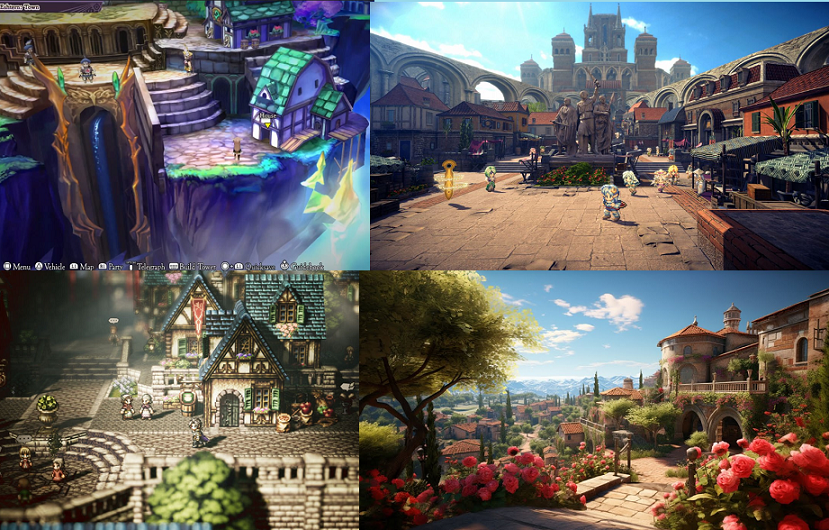
None of this is directly related to the game part of video games, but non-mechanical aspects of games are valuable. As for the real gameplay, it is true, by definition, that if your game is only twenty minutes long, there is only about twenty minutes of content in the game.
I’m not a big believer in radically different content within the same game. With respect to shooters, I prefer Halo:CE’s sandbox focused encounter design, where small variations in enemies and environment are made upon solid fundamentals, in contrast to Half Life’s content-muncher style, where encounters skew towards unique, scripted set pieces, tasking the player in radically different ways against totally different enemies, replete with unasked for puzzle breaks. However, no matter how well designed, there is a limit to the replay value of any particular firefight repeated ad nauseam.
Chess is a truly deep, strategic game, yet the opening can often feel stale and tedious, as you’ll often play very similar positions, or even the exact same position. It’s why Bobby Fischer’s version of chess semi-randomizes the starting position, which removes rote memorization and allows the game to start at move one. Shooters can and often do slightly randomize the spawn locations for any particular encounter, but it’s difficult to radically adjust the environment, and tweaking the spawn locations of enemies risks breaking an encounter. The more robust solution is to simply create a larger set of encounters, but that leads to a game length that was infeasible in arcades.
So in theory, the structural advantage between take-home and arcade games should be similar to that between a musical and a radio song, an epic mini-series and a 22 minute TV show, or a sit down restaurant and a fast food joint. The option for longer game length should be only a good thing, with no downsides. In practice, the results are mixed.
It’s difficult to argue that we’ve progressed with respect to marketing triumphing over game quality. At least in arcades your upfront cost was a quarter. A casual glance at my Steam library shows an embarrassing number of games that I’ve played for less than one hour, in some cases less than ten minutes. Sure, most were purchased at a discount, but the point stands that a bad arcade game hoodwinks you out of a quarter or two, whereas a bad console or PC game steals considerably more on average. The arcade model of flashy graphics enticing you to spend a quarter on a mediocrity is far less predatory than coordinated shilling by every (((Blackrock))) owned “gaming journalism” outlet trying to hoodwink you out of $25 for this garbage.
Game length also has rapidly diminishing marginal returns. Many of the longest games seem more interested in deliberately wasting the player’s time than delivering a tight, focused experience that just so happens to be sixty hours. JRPG grinding is a chore, and most open world games are collectathon slop, with sandbox gems such as Mount & Blade a rarity.

I’ve also grown less enamoured of stories in games. This is partly due to the very low quality of most video game stories, and partly due to their nasty habit of getting in the way of the gameplay. If I want to watch a movie, I’ll just watch a movie, and it’s not like I can escape the poz through modern gaming.

With respect to arcade sensibilities, the baby has been throw out with the bathwater. As far as style goes, I’ve come to appreciate that coin-ops weren’t pretending to be anything more than a good time. There’s a lot to be said for a game that leans into itself, and doesn’t make me play for 20 hours until it ostensibly gets good. Numbers flashing on the screen and an in-game announcer going crazy is just fun.
But more important than superficial elements, there are many arcade inspired mechanics that would be obvious, no-brainer additions to modern games. Scoring systems add a ton of depth and replay value to games, and I can’t think of a game that wouldn’t benefit from including one as an optional mode. Most headscratching of all, I simply cannot explain the bizarre lack of timers in modern games.
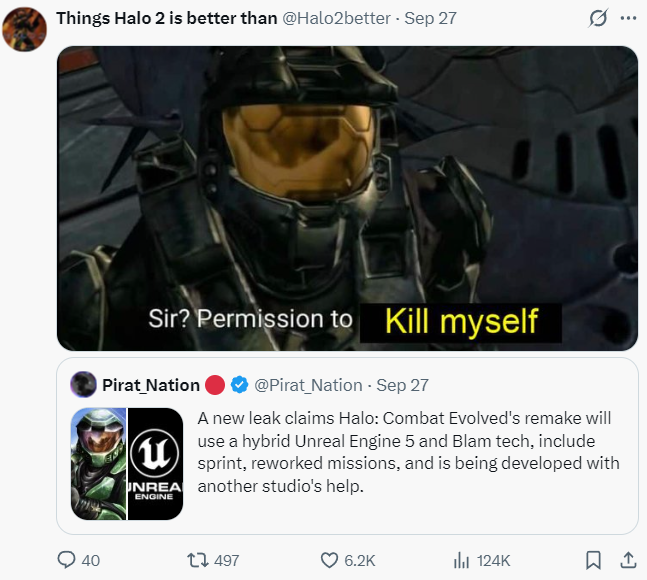
One of my favourite games of all time is Halo:CE, but I’d be the first to admit that it really could use a remake not shat out by the incompetent trash at Microsoft. Ignoring the many possible small improvements to graphics, or story details, there are fundamental flaws with CE’s combat sandbox. One of the most glaring is that there is often zero punishment for retreating behind cover and waiting for your shields to recharge. As a result, the optimal – from the perspective of beating the game – strategy is a tedious process of picking off enemies one by one, only advancing when the coast is clear.
Pretty much the only way the game fights back against this degenerate play is through infinitely respawning enemies, usually flood. This is fairly unsatisfying, somewhat immersion breaking, and can’t be done for every encounter anyway.
The ideal solution would be some combination of enemy abilities, AI, and level design, that punished the player for playing safe, while being very beatable through aggressive play. For a theoretical example, imagine slow firing artillery was placed on a hill above the initial beach assault in Silent Cartographer, combined with and enemies intelligently throwing plasma grenades to restrict the player’s movement while other enemies flank them. Or, on one of the ship levels, there are secret passages the enemies can navigate to effectively teleport behind the player, should they turtle too much. Or we could just give the enemies outright teleportation, and figure out an in-universe justification later.
However, all that makes for a very different game, and tuning those changes would be difficult. Much easier and simpler to just add a timer to most missions, or mission sub-sections, with the in-universe justification that this is a real military operation, therefore time is of the essence. So easy and simple that maybe even these clowns could do it.

It’s real
Bungie implemented a lot of this with the Score Attack mode for Halo 3, which rewards players for killing as many enemies as possible, as quickly as possible, while dying as little as possible. It even comes with an announcer, and while I think the scoring system is somewhat underbaked, it does reward risky, aggressive play, which is more than can be said for the base games.
Of course, a random announcer coupled with score flashing on the screen would probably take away from the initial playthrough, and should therefore be optional. Similar additions, such as the grunt birthday party skull, while hilarious, also shouldn’t be on by default.
But the inclusion of the timer just highlights the broken state of Halo’s vanilla sandbox. Most of the time the player does not have any incentive to take risks other than boredom, and even a very lenient timer would nip the worst of that in the bud.
But this is all actually a gigantic tangent, because the original purpose of this article was to praise the unpretentious style of arcade games. Specifically, I really wish more games had an Attract Mode, which is the term for the state their menus would transition to if they didn’t detect input for a while.
As an example, the main menu in Crazy Taxi (1999) kicks off with a collage of in-engine rendered slapstick driving, then shows the current high scores, before transitioning to actual gameplay footage. Every part of this sequence exists to convey to the player how much fun they’ll have playing the game.
In contrast, the main menu in The Last Of Us (2013) shows an open window with curtains gently swaying in a breeze while some relatively sedate music plays. It never transitions away from this. There is no gameplay shown, no in-engine shots. There aren’t even any character models shown, or concept art featured. Were it not for the “press start button” prompt, one could mistake this for the start screen of a DVD.
Which is intentional. The Last Of Us was made by developers who were disappointed they ended up making games for a living. The fact that their game happens to contain a small amount of gameplay is an embarrassment, a necessary evil whose inclusion allowed them to show off their art and story. There is no attract mode, because what’s the point in showing gameplay when gameplay is icky?
Pretty much every arcade game had an attract mode, as it was their main form of marketing. It would therefore be easy to argue that the attract mode is an arcade relic. After all, by the time a game is running on your television it probably doesn’t need to sell itself to you anymore.
I get those arguments, but I don’t agree, for two reasons. First, I love every part of a game selling itself with its own gameplay footage. The developers playing their own game a ton, finding the coolest things, and then editing it all down into a short video implies a certain love for their own game that I find cute. It’s also just a great vibe that the main selling point in a game is not the artwork, or the music, or the story, but the gameplay. In other words, the thing the player actually does.
Finally, it’s just plain more interesting than a static screen. Or even a screen that has some minimalist animation going on. Production values are valuable, and I’m not that impressed by a multi-billion dollar company’s “miminalist” approach to menus.
Which appears all to common these days.
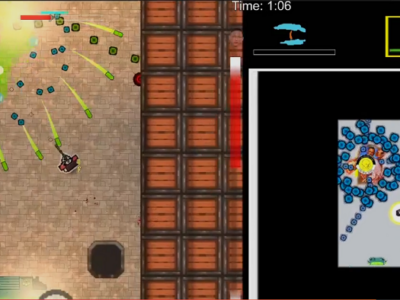
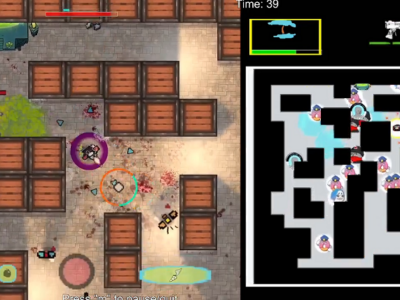
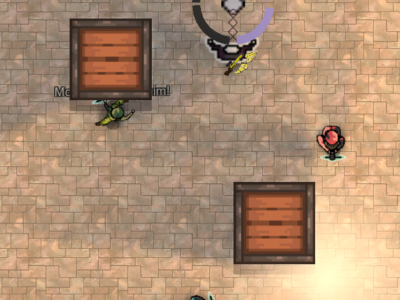
There’s a broader point here with modern AAA games costing billions, yet still being underproduced. That’s for another article, because this was actually just a very long prelude to the real point of the article, which is that I was tired of the menus in Escape From Epstein Island looking like trash, so I did a ton of work on them.
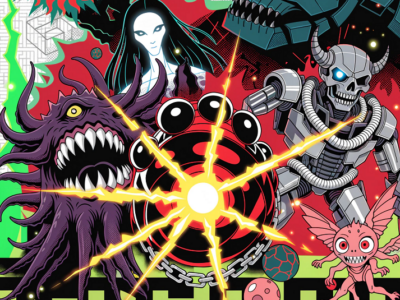
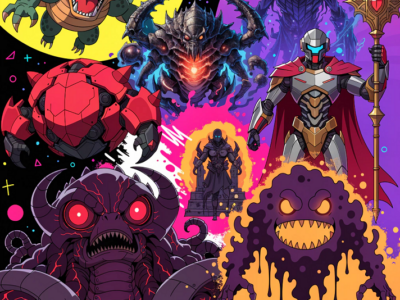
Yes, all the AI slop company graphic and intro video is placeholder. However, similar to the lack of lighting, I realized that there just wasn’t much of an excuse to not have a certain baseline of menu quality by this point. I needed to implement a splash screen, then an introductory screen with some programmed text effect, in this case stolen from the Killer Instinct attract mode. Finally, there was no reason not to have an attract mode in the main menu, which in this case alternates between gameplay footage and a character sheet, similar to that seen in the Ninja Turtles beat ’em up game, which displays the enemies you’ll be fighting against.
You may have noticed the announcer in the menus. I was extremely pleased with how he turned out, to the point where I don’t think I’ll use the term “AI slop” for that, as voice imitation appears to be something machine learning excels at. Anyway, very few of the lines have been implemented in-game yet.
There are many things to add, but I’m forcing myself to stop for now. Having spent quite literally more than a month on this, I totally understand why senior programmers pawn off UI programmings to interns, and why so many games have crappy menus. It’s difficult, tedious, and incredibly time consuming work. Further improvements require graphic design, which is far from one of my strengths, and it’s frustrating spending a few days on some text effect, only to realize that it wasn’t a particularly bright idea in the first place.
Having said all that, I’m happy with the results, and the process of adding announcer lines to various in-game events is going far quicker.






You made a great case for the Attract Mode that I hadn’t previously considered. That you’ve already bought the game seemed to be the obvious nail in the coffin for the artform – why watch demos if you’re literally already sold – but you pointed out how it can be used to showcase various elements of the game that might not be otherwise appreciated.
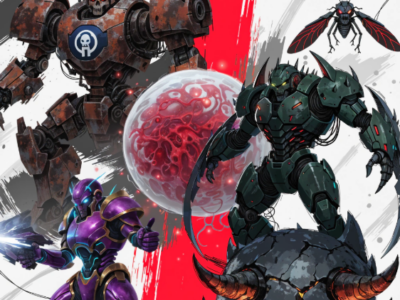
The enemy bestiary for instance is great for the Attract Mode. Not only are your bestiary entries particularly flavorful thematically, but players might not be able to fully appreciate them in the gameplay itself otherwise being too busy playing the game directly. It also can showcase what such enemies do, and instances of them in action against the demo player, which is an entertaining way of giving them a taste of what to expect.
Another aspect is giving the player ideas on *how* they could play the game. Ranging from basic low-level gameplay to advanced super-cool high-skill stuff would be simply a matter of curating gameplay clips. Like your previous articles showing all the creative (and funny) ways players could overcome enemies in Dark Messiah, many of those techniques like throwing objects in the air or prepping magical traps might not have occurred to every player until they saw an example of it in action. By giving optional hints and tips and tricks through that medium, you might in fact enhance a player’s experience who would go, “Oh! That’s so cool – I’ve got to try that!”
This outlook can be further expanded to the video game spandrels that are loading screens. In the original Black Lives Splatter for instance, those screens were used to share random facts pertinent to Nationalist discourse. During loading times that otherwise might be boring, Attract Modelets so to speak could give some fun flavor and anticipation to the coming carnage. With enough of a catalogue of scenes like that, alongside level-specific rolodex of them, it might serve to carry that arcade-y feel while players are waiting for things to load in. Tying them further as implicit mini-rewards as the player progresses through the game could also be an option if such a thing were explored.
What I like about arcade games was their relationship with difficulty. So many games today tiptoe around difficulty and have a sort of love-hate relationship with it. Everyone is *supposed* to get to the end, so the philosophy generally goes, and in so doing there is very little sense of achievement for players who like challenges. Arcade games, however, frequently didn’t give a damn if you DID get to the end, and yet gave a fairly interesting reward to those who actually made it all the way through – a reward that was made all the sweeter for having been only one of the few who obtained it. I miss that. Good news though is on this matter we can largely have our cake and eat it too, if only we design it with player rewards big and small in mind!
Yes, the attract mode screen can definitely double as a sort of tutorial, both for the basics and advanced parts of the game. That’s just not a huge priority right now because creating and editing those kinds of videos is a huge timesink, especially as the game still needs serious work in terms of AI, graphics, etcetera.
I didn’t even think of inserting political messaging into loading screens, partly because this game doesn’t really have them. It’s very quick to load in a 2D level on modern hardware. However, that would have been a better use of the intro splash screens than the AI slop logo. If something akin to the NJP (but serious) was around I’d find a way for the game to include a non-pushy recruiting message, maybe on startup, somewhere in there. I could also fake loading screens. They could even be stated as fake loading screens that you can press any button to skip, because that kind of fits the theme here.
The discourse around difficulty has become so bizarre in modern games. It used to be that almost everyone who bought a game got to see the ending, but only a select few could brag about beating it on the hardest difficulty. We’re currently living through a bizarre trend of no difficulty levels, which simply means that the game is poorly tuned for any given player at any given time. Arcade games, especially shmups, were often hard to beat, but also often had harder difficulty modes that unlocked if you beat the game well enough.
Why does the author believe that timers and scoring systems could improve gameplay and replay value?
No offense, but I thought I made that pretty clear in the article. And if not this one, my newer article about Jaime Griesemer.